To mark its 25th anniversary, Wikipedia has launched a new global campaign and docuseries that shifts the focus away from the platform itself and onto the volunteers who quietly keep one of the internet’s most trusted spaces alive.
As debates around truth, misinformation and AI-generated content continue to dominate public discourse, Wikipedia has found itself described as “the last best place on the internet”. A place built on discussion, disagreement and consensus rather than algorithms and outrage. To celebrate a quarter century of that mission, the Wikimedia Foundation has unveiled a new campaign that asks a simple but timely question: Who actually makes knowledge possible?
Developed in partnership with purpose-led creative shop Kin, the campaign centres on a first-of-its-kind video docuseries that goes behind the scenes of Wikipedia’s vast volunteer community. Nearly all of the information on the site is written, edited and fact-checked by around 250,000 volunteers worldwide, working to rigorous standards of neutrality and reliability.
The series introduces eight of them, offering a rare, human view into how knowledge is built and maintained every day.
The editors featured span continents, professions and motivations. There’s a Californian who has spent two decades meticulously documenting hurricanes and storms; an Indian medical doctor who helped share critical COVID-19 information during the pandemic; an elderly librarian in Tokyo translating and preserving knowledge in Japanese; a photographer in New Haven, Connecticut – known as “The Singing Photographer” – who uploads images that more accurately represent Black culture.
Together, their stories underline that, even in an age of AI, knowledge is still human and it still needs humans.
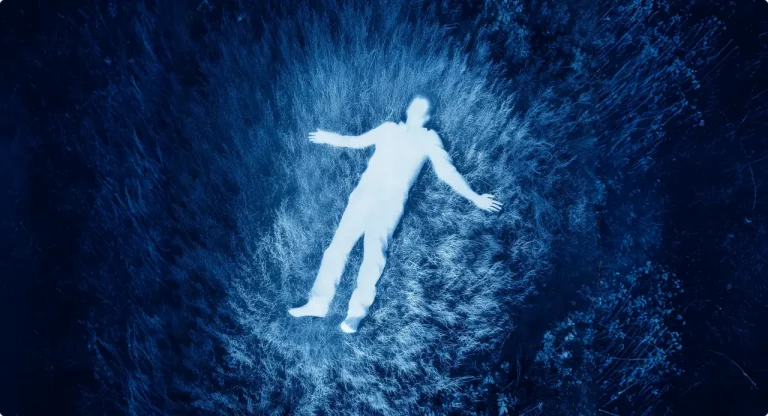
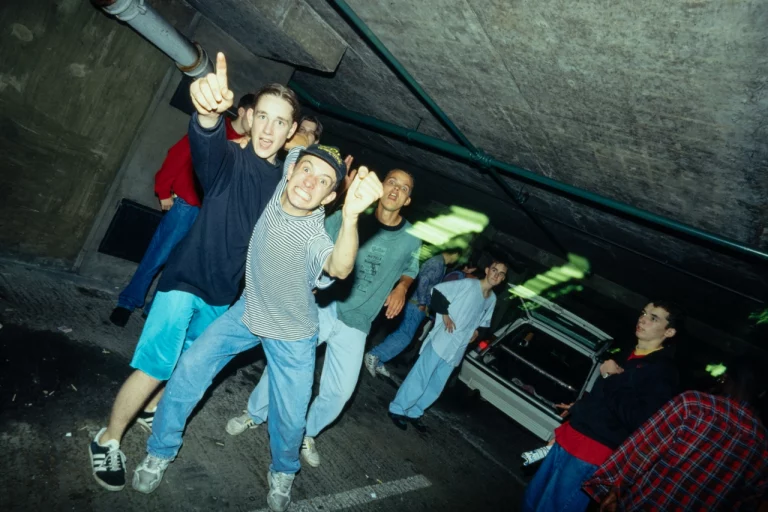
Alongside the docuseries, Kin also created a 90-second brand anthem film released in late 2025, designed to re-energise public support for Wikipedia’s mission ahead of the anniversary year. The film is built entirely from Wikimedia Commons assets – over 700 images and videos sourced from across the globe – and acts as both a creative challenge and a conceptual statement.
“25 years ago, Wikipedia was a dream – a wildly ambitious and probably impossible dream… (now) it’s 25 years of knowledge, collaboration, consensus and humanity at its best,” the film declares. Directed by international artist, photographer and director Adrian Yu of Excetera, its structure mirrors the rhythm of human contribution itself, showing how millions of hands and minds, across languages and generations, have built something genuinely collective.
Sophie Ozoux, co-founder at Kin, explains why grounding the campaign in people rather than platforms was essential. “We didn’t start from an abstract idea of ‘the last best place on the internet’ – we started with the people behind it,” she says. “Because this 25th anniversary is ultimately about that: celebrating and reaffirming the incredible, essential work of the community of humans who make Wikipedia possible.”
That choice was also a deliberate rejection of the idea that humanity and innovation sit at opposite ends of the spectrum. “There’s a misconception that innovation has to feel cold or purely technological, and that centring humanity automatically leads to nostalgia or sentimentality,” Sophie says. “We rejected that binary. What these editors are doing is not quaint – it’s radical.”
Rather than positioning individual contributors as heroes, the series treats them as entry points into a much larger, ongoing process. “Authorship on Wikipedia is fundamentally collective,” Sophie notes. “While the series spotlights eight editors, no article is ever the work of a single person.” That understanding shaped everything from casting to tone, prioritising range, contrast and lived perspective over tidy narratives or spectacle.
Working entirely with Wikimedia Commons assets further reinforced that philosophy. Every image and clip had to be sourced, reviewed and approved in close collaboration with Wikipedia partners – an effort Sophie describes as “almost titanic”. Yet creatively, the constraint proved generative.
“We weren’t borrowing from Wikipedia’s world – we were building from inside it,” she says. “Editing became a form of curation and composition, mirroring how Wikipedia itself is built.”
The campaign does well by taking knowledge seriously without stripping it of joy. Playful moments, like debates over spelling, visual easter eggs, and subtle nods to AI and machine reading, sit alongside a deeper respect for the labour involved in keeping information accurate and accessible.
Zack McCune, director of global brand at the Wikimedia Foundation, says: “Wikipedia is one of the world’s best examples of the human potential to create something meaningful through collaboration.
“This campaign embodies that spirit, highlighting the people who make this global knowledge resource possible.”
The campaign also kicks off a year-long programme of anniversary activity, including a “25 Years of Wikipedia” time capsule, a new interactive quiz, and social features inviting people to “sign” a digital birthday card, aiming to make it the longest birthday card ever.
Despite living in a digital landscape increasingly shaped by automation and noise, Wikipedia has sought to remind us that knowledge doesn’t appear fully formed. It’s debated, corrected, expanded and cared for by people who believe it should belong to everyone. Twenty-five years on, that belief still holds, and perhaps matters more than ever.