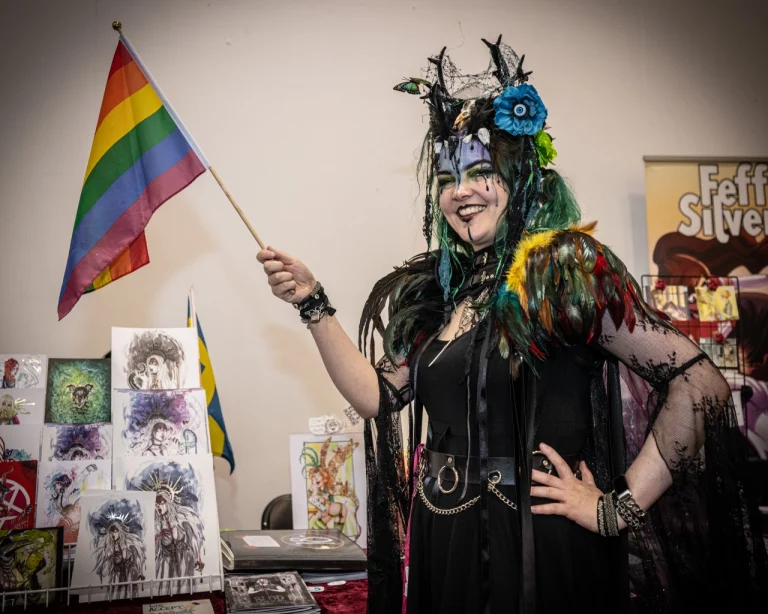
Cannes Lions Creators Party. © Caitlin Bulley
From the inversion of creator authority to a craving for tangible, screen-free experiences, this year’s festival was less a celebration of technology than a reminder of what it can’t replace.
You’d expect AI to dominate Cannes Lions, and it did – on every stage, in every panel, from inside the Palais to the fringe events lining the Croisette. But beneath the headline topics, the conversation had shifted since last year.
If there was one overarching theme, it was how we could work with technology moving forward, including the power of indie creators. Here’s what stood out from one of the industry’s biggest events of the year.
The inversion of authority
We reported on the rise of the creator CEO in our 2025 round-up, in which creators were increasingly driving the programming, partnerships, and conversations around the festival. This year, their presence was impossible to ignore.
Alongside some genuinely thoughtful reporting, there was also a noticeable rise in social content that prioritised access over analysis, often offering little beyond celebrity sightings, activation tours and proof of attendance. A similar pattern emerged in some fringe programming, where personality occasionally outweighed originality.
Amy Daroukakis & Sarah Owen, Terrace Stage © Cristina Talpa
Ironically, this created even more space for creators, strategists, and journalists with genuinely fresh perspectives.
Rachel Lowenstein captured the shift perfectly: “One of my key takeaways is that Lions is now a tale of two festivals: the advertiser festival and the creator festival. As someone who straddles both worlds as a tenured strategist and a content creator, I felt like I was living two lives all week. The industry is at a fulcrum point where it doesn’t quite know what to do with the inversion of authority creators are having on agencies and brands.”
That divide was perhaps most noticeable between the conversations happening inside the Palais around the work being judged (the reason Cannes Lions exists in the first place) and those happening across the fringe around activations, personalities and social content. It was also an observation picked up by the creator of the Social Juice newsletter, Jaskaran Saini.
Culture beats scale
Beyond the creator conversation, culture was another theme emerging throughout the week.
Whether it was discussions around fandom, women creators, cultural intelligence or the role of independent agencies, the message was remarkably consistent. Scale alone is no longer enough.
Speaking across five sessions, including talks for UN Women and the Unstereotype Alliance, Rachel Lowenstein argued that brands need to take women creators seriously as entrepreneurs and recognise influencing as an industry that financially empowers women, rather than dismissing it as superficial.
Creator’s Tour with Rob Mayhew © Caitlin Bulley
Elsewhere, her sessions with Reddit, Yahoo and Collins explored why fangirls sit at the centre of today’s cultural conversations and why understanding fandom is increasingly becoming a competitive advantage for marketers. At the Palais, in partnership with the Effie LIONS Foundation, she encouraged young creatives to unlock their unfair advantage through cultural intelligence.
Rory Sutherland echoed the sentiment at Collins House, who observed: “Agencies nowadays are obsessed by scale. Nothing scales better than mediocrity.”
Colette Phillip built on that argument, suggesting that consolidation and one-size-fits-all thinking are eroding creativity. As larger holding companies continue to merge, independent agencies have an opportunity to compete through distinctive thinking, deeper cultural understanding and closer relationships with the communities they serve.
AI made us crave human experiences
If AI dominated the conversations on stage, many of the standout activations encouraged people to step away from their screens.
In contrast to last year’s AI-led activations and endless branded merchandise, the pendulum swung back towards tangible, sensory experiences.
Pinterest invited visitors to create personalised journals in partnership with Adobe Express, alongside a series of tactile experiences including tattoos, French pâtisserie and hair bleaching.
LinkedIn © Cristina Talpa
French sonic branding agency Sixième Son took attendees away from the Croisette on its Sound of the Sea cruise, demonstrating how sound influences memory, emotion, stress and decision-making. Rather than competing for attention, it offered something much rarer during festival week: a moment of calm.
Sound also featured prominently at Stagwell Sports Beach, where Epidemic Sound created an AI-powered radio activation.
Interestingly, there were four different postcard activations alongside brands that repeatedly encourage visitors to create something physical rather than more digital content.
Networking got moving
Alongside the first dedicated Lions Sport programme, morning fitness sessions and sports clinics have become fixtures of the festival, while fringe events are increasingly centred around walks, runs and movement rather than traditional networking receptions.
Girl Hike CIC brought women together through walking, while Alaina Crystal partnered with Chief to create a leadership experience where women could visualise their future selves, share personal leadership journeys and build meaningful connections in a lower-pressure environment.
Against the backdrop of AI-heavy discussions, many attendees seemed to be searching for slower, more human ways to connect.
Effie’s Reception © Caitlin Bulley
AI grows up
AI dominated the conversation once again this year, but the discussion itself had matured.
Last year, many debates centred on how creative businesses should use AI and whether it threatens creativity. This year, the conversation shifted towards how AI can eliminate repetitive work while preserving the distinctly human skills technology can’t replicate.
Colette Phillip’s takeaway from the talks was that AI should reduce the administrative and mind-numbing production work that often gets in the way of creativity, freeing people to focus on ideas rather than process. Several speakers also stressed the importance of continuing to nurture junior talent rather than assuming technology will replace the need for creative development.
Jon Williams, founder and CEO of The Liberty Guild, summed it up: “It seems to me the biggest misconception coming out of Cannes is that AI is changing creativity. It isn’t. What it’s really changing is where value sits. And this is a huge advantage for creatives. And this is why creative judgment is becoming the most valuable commodity. Some call it taste. It’s pretty damn hard to prompt. What remains difficult to replicate are the things that have always driven preference: cultural relevance, emotional connection, distinctiveness and trust – and these are the powers of the creative mind.”
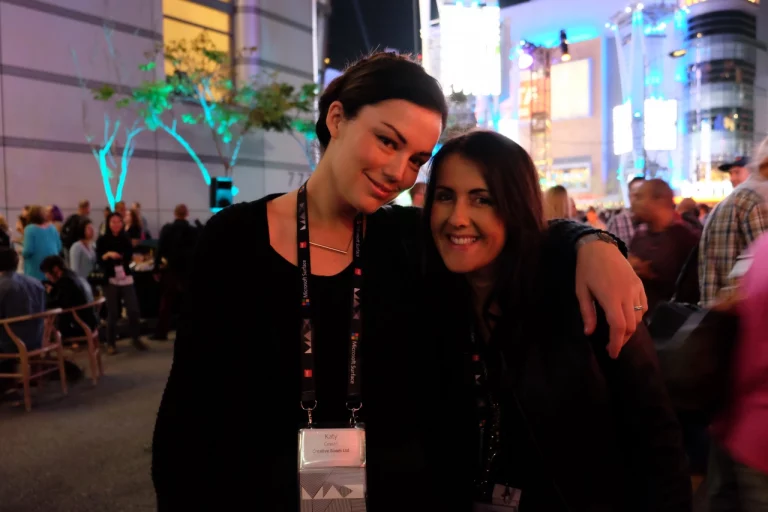
Cannes Lions Creators Party. © Caitlin Bulley
The key takeaway?
Taken together, this year’s festival felt less like a celebration of technology than a reminder of what technology can’t replace.
Whether that was fandom, trusted creators, physical experiences or creative judgment, the strongest conversations kept returning to distinctly human qualities.
AI may have dominated the agenda, but taste, culture and connection quietly became the themes that lingered long after the rosé had been packed away.