After losing commissions to AI, the stop-motion animator started posting her hand-drawn work online and found a community of like-minded people instead.
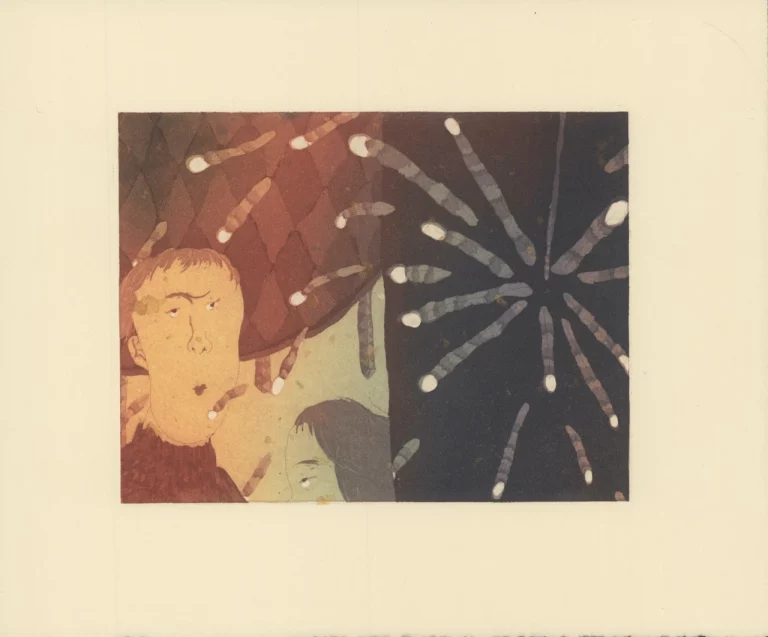
“I see myself as a pretty pessimistic person, which is probably why I’m drawn to creating things that have a sense of innocence and naivety,” says Ester Pazur. It’s a telling line from an animator whose work – which is filled with birds scattering across storm clouds, a fox curled in tall grass, a horse lifted straight off a carpet pattern and set running – reads like a cosy, slightly melancholy children’s book. “I want to create something warm and comforting,” she says, “a safe place that other people and I can escape to from the difficult world we live in.”
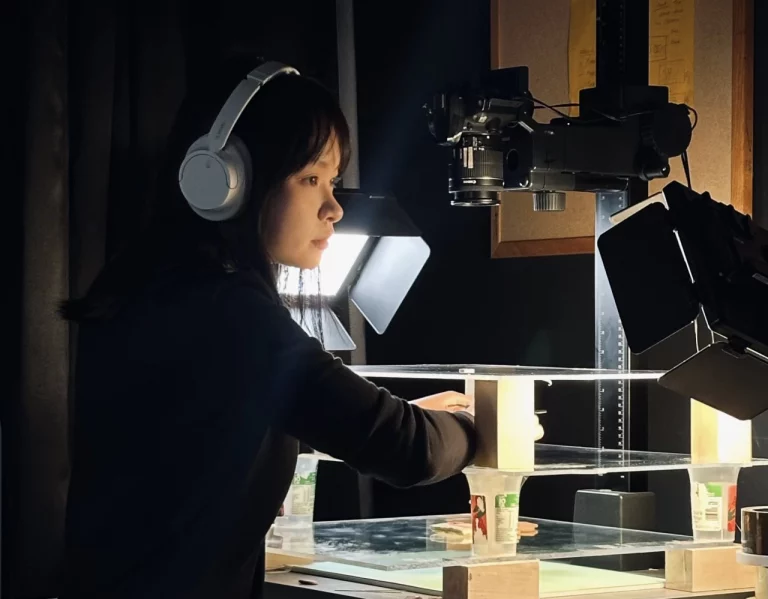
Ester is finishing a bachelor’s degree in animation, specialising in stop motion, and has spent roughly a decade finding her way there. She started out drawing in an academic, impressionistic style, then dabbled in anime during its online peak, before realising she was far more drawn to the experimental and surreal.
Animation turned out to be a niche field in more ways than one. Partway through her degree, AI tools arrived at speed, and Ester watched several job opportunities go to generated images instead of her own hand. “I never connected with AI, and I found the situation quite discouraging,” she says. In response, she started posting her personal work on Instagram – and the reaction surprised her. She’s now at 64k followers. “It made me realise that there are still many people who want to see real art, and that there is a strong desire for something personal, handmade and human.”
Her process starts loose, fluid and without a fixed plan. “I like to discover the visual language of a project as I work on it, starting with an image, feeling or small idea that catches my attention,” she explains. The running horse animation, for example, began with her lying on her mother’s sofa, staring at a farm scene printed on the carpet. “There was a horse in the design that I really loved. Something about its shape caught my attention, and I suddenly thought it would be interesting to see it move.” Another piece, Thunder Storm in Minneapolis, grew out of David Hockney’s iPad paintings – in which Ester was inspired by how he captured landscapes digitally while keeping a painterly hand.
That painterly quality can be seen in the animation of her mother pouring milk into an Americano – a nod to her mother, an oil painter working in an Impressionist, Expressionist style. “I love that such a simple everyday moment can become something visually rich and personal.” She’s also created a series of loop animations, drawn directly onto paper in just eight or 12 frames, “without planning every frame in advance, allowing the image to develop instinctively”.
One key thing to note is that Ester isn’t interested in selling out a single message from her work; instead, she’d like to stir emotion. “I would rather create a feeling or question that stays with [the audience] after watching or looking at the world,” she says. “In a world increasingly filled with AI-generated imagery, the physical presence of the artist and the process of making something by hand have become especially meaningful to me.”