After almost three decades, 50-odd D&AD pencils and champagne at Buckingham Palace, Alan Dye and Nick Finney have closed NB Studio. Alan tells Creative Boom why he’s thrilled to be an absolute beginner again.
Alan Dye wants to show me something. Halfway through our Zoom call, he turns his camera round to show his screen. On it, he’s just typed a single word. Joy, against a sunshine-yellow backdrop. “That’s what it needs,” he says. “A bit more joy.”
I must admit, it wasn’t the mood I was expecting from someone who’s just shut the studio he spent 29 years building. NB Studio, the London agency he founded in 1997 with Nick Finney and Ben Stott, officially closed on 20 June 2026. They just announced it on LinkedIn. The farewell note was titled “So long, and thanks for all the kerning”. If you know, you know.
“We decided to call it a day after 29 years,” Alan says. “It’s a big thing. But Nick and I had such a brilliant time. We started at Pentagram, kicked off not knowing anything really, worked with amazing people and made some lovely work that took us around the world.”
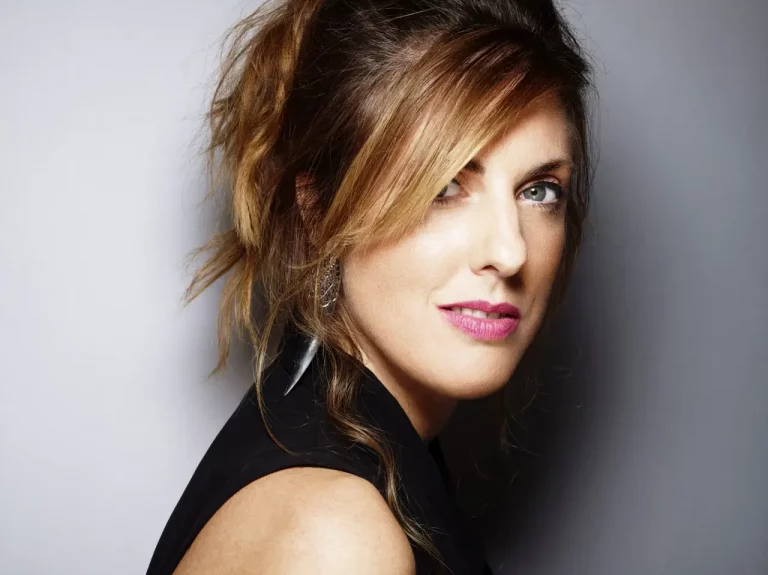
Alan looks relaxed and happy in his newly refurbished home office in West London. Fresh white paint covers the walls, shelves are full of books, and neat frames hold typographic posters behind him. Natural light floods in. He can’t sit still in his chair as he talks about the last 29 years, and I’m grinning. He turns 60 in December, and he’s full of new momentum.
NB Studio
Even though it’s the first time we’ve actually spoken on a call, I’ve known Alan for years. He’s been so kind to Creative Boom, and been a real cheerleader for all we’re doing. He’d often pop up in my inbox or DMs, just to say hello and ask how I’m doing. That sort of thoughtfulness from someone so respected has partly kept me going these 17 years. And it’s lovely to tell Alan that now.
Not a big fancy agency
His story began with two desks, back to back at Pentagram, and the pub next door, which became a makeshift office. “The dream was fun, fame and fortune,” Nick and Alan write in their farewell. “The rest we’d figure out along the way.”
Well, they did pretty well. When Ben left for Apple, they weren’t sure NB would survive. But it did. Basically, on a vow to only employ people better than themselves. A wise approach. Students came through the door and never left. The studio shelf ended up with 50-odd D&AD pencils. Clients let them loose on “booze, babies, banks, theatres, universities, deep-tech start-ups and a fair amount in between”, and the work took them to distilleries in Speyside, tea plantations in Sri Lanka and even Buckingham Palace.
Anna Money
The Kraken vs The World
Ahead of pulling together this piece, Alan says: “Just have a look on the website…it’s still alive, I think.” And so I’ve picked out a few highlights to share. Browsing through, it was a line on the about page that got me: “The fact is we’re not a huge shiny agency – we’re an enthusiastic and talented bunch of creatives who want to make a difference. Independent since 1997, we say what we think and stand up for the things we believe in.” Yeah. We have a lot in common. Creative Boom has the same energy. I suspect it’s also why NB’s work never looked like anyone else’s.
“NB Studio was very gridded and Swiss, with lovely fonts, but we always splashed it with a bit of something,” he says. “A bit of colour. A bit of illustration. Nick and I were probably the biggest kids in the studio.”
Doing things differently
That creativity is something Alan misses when he looks around today. He points to digital banking, as an example, where every brand seems to have the same green background. “Everything looks very homogeneous at the moment,” he says. “Where’s the wit and the humour? The lovely quirk of design, all the tactility?”
NB’s back catalogue certainly doesn’t look boring. ANNA Money, for instance, is a business admin app the studio branded with a warm terracotta orange instead of the usual cold banking hues. With doodles by illustrator Alice Bowsher as its handwriting, it definitely stands out.
Almeida Theatre branding
Then there’s Petit Pli, the children’s clothing that grows with the child. NB’s logotype pleats and stretches like the garments. Even the delivery box transforms into a wearable jetpack. It won three pencils at the 2019 D&AD Awards. For the Almeida Theatre, they put the word “Theatre” back in the name, then turned it upside down. And for Royal Mail, they marked 50 years of Pride with eight stamps illustrated by Sofie Birkin, brought to life in a hand-drawn film by Animade.
And when D&AD itself needed an identity for its awards night at the Roundhouse, NB sent out a pair of white-gloved hands and filmed them in a single take.
Back to the point about “sameness”, Alan has seen it before. “In the early 90s, it was so rigid and grey and Swiss. And it was beautiful. But you needed a bit of colour to come through.”
Much of the industry has been playing it safe for some time. You can hardly blame it. Creative Boom alone has gone from global economic crisis to pandemic and everything in between. It’s no surprise people don’t want to rock the boat. And now we have AI. Look around online, and if you’re familiar enough with Claude Design, then you’ll spot the telltale signs. People might be updating their websites a lot faster, but they’re starting to look too familiar.
Royal Mail: 50 years of Pride
Work for Typographic CircleVineyard Theatre
The D&AD Awards
Which raises the next question: does Alan think we’re on the brink of a creative overhaul? “That’s a good thing. I think it will happen, because it will have to.”
So why now?
The farewell note on LinkedIn puts it gently. “The world we walked into in 1997 was full of hope and possibility. It still is. It just looks different now, and so do we. Which is exactly why we’re not getting comfortable.”
Closing a studio is never easy, especially when you consider all the people who worked there. Alan and Nick call the designers, writers, strategists, client managers and studio managers “the heart of NB”, and thank everyone who “worked alongside us and put up with us”.
So NB Studio has closed. Alan and Nick “very much aren’t”. Both are now working independently, and sometimes together. They’ve just won a job as a pair, in fact. “Same love of ideas and design,” they write. “Just a different shape.”
Finding a new path
This new adventure has brought Alan back to the creative work. He started in 1990 at a parallel motion drawing board, so you’d think the nerves would have gone by now. “I’m back to designing again, and it’s joyful,” he says. “I’m a beginner again. An absolute beginner. It’s always about the next project, so you go back to thinking, ‘Oh, this is really difficult. Is it any good?'”
Ravensbourne rebrand
With so much experience behind him, I had to ask – for anyone coming into the creative industry now, what would he say? He quotes Oscar Wilde: “Be yourself. Everybody else is taken.”
He also shares a line he learned from the branding great Michael Wolff and attributes to Maya Angelou: “People forget what you say, people forget what you do, but no one will forget how you make them feel,” he recalls. “I think that is beautiful. It sums up branding for me.”
“Just do what you want to do,” he adds. “If people like it, they like it.” And if they don’t? Alan has a short, cheerful and unprintable answer to that. “Life’s too short,” he concludes.
Of course, I couldn’t resist asking what one thing he’d change about Creative Boom. “Just dial yourself up more,” he says. From someone who’s spent nearly three decades doing just that, I’ll take it. (My bottom lip may have wobbled.)
Which leaves the small matter of what to call this feature. “Joy,” he says. “I think just call it Joy.”
Royal Mail 150 years of the London Underground stamp set