The Rotterdam-based illustrator and animator fills her pictures with willows, sleepy dogs and small sensory details from the world around her.
A horse gallops across a patchwork of tiny scenes, its mane streaking upwards like a flame, its body is drawn in loose, chalky pencil that turns pale where it crosses a panel of blue reeds. Around it, the grid shifts from square to square, detailing a black storm sky, a flock of birds over yellow fields, a child running and another child lying on a gingham blanket. This is The Red Horse by Simji Park, and among her signature palette of soft greens and dusty blues, it’s perhaps one of her loudest illustrations.
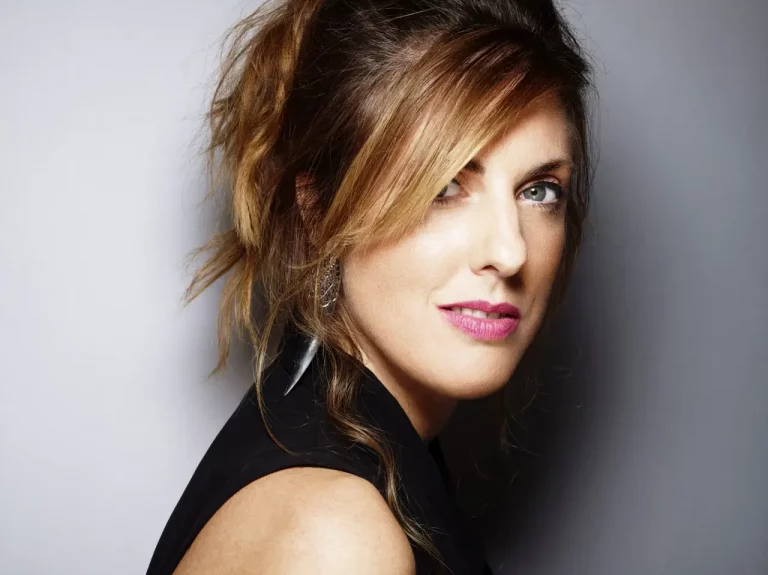
Simji grew up in South Korea and now lives in Rotterdam. She studied animation at the Royal College of Art in London, and after graduating in 2017 she went freelance, making illustration and animation projects on her own terms. In 2019 she won first prize for children’s illustration at the Faber Adlyn Prize. Today she splits her week between her own studio and the classroom, teaching animation at Willem de Kooning Academy in Rotterdam. “So at the moment, I’m kind of splitting my time between my own practice and teaching.”
Just like her colour palettes, her subject matter is subtle, soft and tonal, drawn from the environment around her. “It took me a while to notice, but much of my inspiration comes from the quiet of nature. I’ve always loved being somewhere in nature because it’s one of the few places where I feel like I can fully rest mentally.” Walking through the forest, feeling the breeze on her face, or watching the seasons change leaf by leaf is what gives her a “quiet excitement” – “it helps me feel present and grounded in the moment.” She takes note of these small sensory details – “the feeling of the air, the temperature, moving leaves or the mood of a particular day” – and turns them into dreamy, hazy drawings later on.
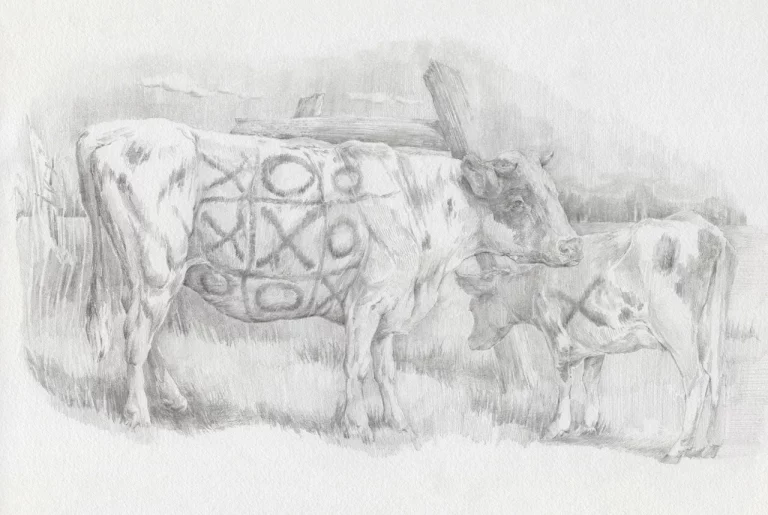
Have a gander through her portfolio and you can see exactly where they show up – as willows and dark trees standing in a row above a pond, reflected in blue water thick with lily pads. Or as a boy in a white T-shirt leaning on a bicycle in front of an ivy-covered brick wall, with a bunch of leaves in the basket. Or as two yellow animals grazing beside a still grey-blue lake while white birds glide overhead. There’s one of a tiny dog walker strolling beneath a huge earthy mountain, and one of a bare tree full of birds with a small red dog sketched at the bottom. And in her panel illustrations, you’ll see a poodle, a woman sitting on a stool and a road curving through hills and a snowy peak – which feels like you’re flipping through a friend’s photo album.
When making one of these delectable artworks, Simji’s process starts with a fix for a common problem. “When my perfectionism takes over, I sometimes get stuck and can’t create because I worry it won’t be good enough.” So she started drawing small things every day, with no pressure about the outcome. “The drawings don’t have to be perfect or even especially good. Doing this helps me keep moving.” Sometimes nothing comes from it, but other times a casual sketch becomes a bigger piece. “I think my process is less about having a clear idea from the beginning, and more about making things first and discovering where they can go.”
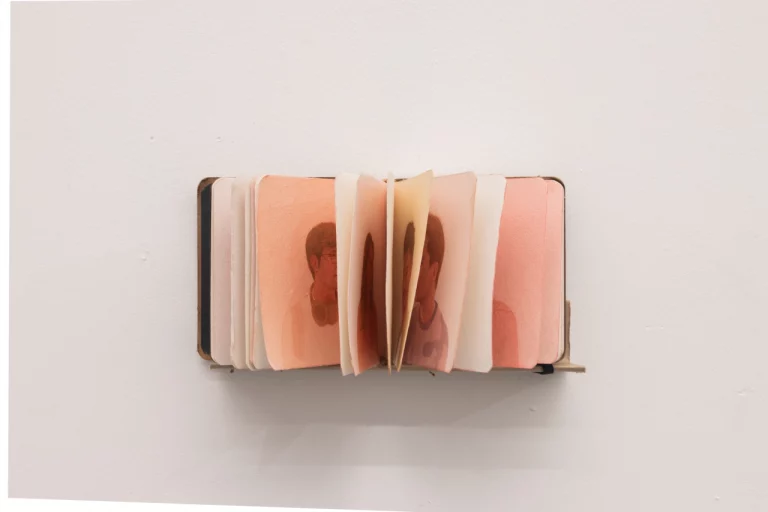
The Red Horse and Living Things are her recent favourites, because they say what she can’t in the real world. “I’ve realised that I actually have a lot I want to say, but I don’t always know how to express it verbally,” she explains. As a result, she collects images, colours and movements as reminders of what she’s trying to communicate. “With these two pieces, I felt the images could carry the feeling and intention behind the work without me having to explain everything too clearly.”
With this in mind, Simji doesn’t try to steer what viewers feel and how they read her pieces. “It’s always hard to know how people will react to my work, and I don’t want to control that too much. Mostly, I hope to share feelings or impressions that are hard for me to put into words. It doesn’t need to be complicated. If someone looks at my work and feels a bit calmer or finds a small moment of rest, that makes me happy.”