The founders of the global brand agency explain how emotional intelligence and restless reinvention keep them creatively relevant.
Led by founders Simon Dixon and Aporva Baxi, DixonBaxi is one of those studios the creative world instinctively labels as “cool”. And on the face of it, that’s not so surprising. This is the team, after all, that helped reshape ITV’s on‑screen identity, re‑energised Formula One’s fan experience, and quietly advises everyone from streaming giants to sports leagues on how their brands should look, feel and behave.
That’s not to mention their growing body of self‑initiated work. Projects ranging from their 500‑page Remix book to a forthcoming paperback that lifts the lid on “the work between the work” have only added to the sense that they operate at a slightly different frequency to the rest of us.
But enter their London space, and you’re greeted by something very different from the hushed temple to cool you might expect. It feels more like a working laboratory held together by notebooks, Hula Hoops and a relentless belief that design should feel alive.
What it’s like inside
The kitchen doubles as a crit room; lunch becomes what Aporva cheerfully calls “a cacophony of things”, with people chopping salads, comparing notes on work, and essentially having a shared meal every day. It is deliberately social, but don’t get the wrong idea. The founders resist the cliché of “we’re all one big happy family”.
Simon is clear about the distinction. “You want to have an emotional connection with people, and you want that relationship to be truthful and honest,” he says. “But we all actually have families. So our job as founders is to create a space where people feel safe, part of something, where they have a real voice and feel like they’re growing.”
That balance between the collective and the individual is central to how the studio runs. “You’re trying to create an entity that’s nearly 60 people,” he adds, “but the person inside that has to feel like it’s their journey as well, not just the studio’s.”
For Aporva, that means being relentlessly present. He spends a lot of time in the kitchen, not because he’s hovering, but because “everyone comes up for water or tea at some point, and you get a temperature of everything”. Those informal encounters might be where he spots when someone is stuck, needs a sounding board, or just needs a laugh and a biscuit to reset. Leadership here is as much about reading the room as setting a vision.
Walls, campfires and making work visible
Physically, the studio is designed to keep the work visible and in motion. Downstairs, teams orbit across open desks: motion, designers, writers, strategy, growth. Projects don’t live quietly on servers; they spill onto the walls.
The point, Simon says, is that screens encourage linear, overloaded thinking, whereas walls encourage serendipity. “When you look at work on a screen, there’s a lot of visual overload, and you’re looking at things sequentially,” he says. “When you put things on the wall, you see happy accidents. Something catches your eye, soaks into your mind, and later it might give you a different idea.”
Those walls also train a different kind of muscle: the tolerance for imperfection. “It creates a culture of not being afraid to share work when it’s not perfect,” Simon says. “There’s a lot of tension when you’re creating, and it’s not right yet. When work is up and clearly unfinished, you’re building the tolerance that it’s okay. If it’s not right, we move to something else.”
That attitude is reinforced in what DixonBaxi calls “campfires”: open sessions where the work is laid out and the question is not “what’s wrong?” but “what have we won?” Everyone in the room is expected to contribute, because the goal is a shared world view: where each project is heading and how distinct it feels from the others.
For a studio working across everything from broadcasters to sports brands, that discipline matters. The first impression for the audience has to be clear, memorable and fit‑for‑purpose without anyone standing next to the work to explain it.
What “serious play” actually means
One phrase that keeps surfacing here is “serious play”. It’s easy to toss that around as a slogan, but at DixonBaxi, it is a deliberate part of the process, with its own time, space and rules. A typical example is their internal “Inspire” phase: an ignition period where the team deliberately suspends the brief and plays with the brand as freely as possible.
During their work with Formula 1, creative director Tassia Swulinska reveals that she covered an entire wall in four days, with explorations made before the formal brief landed. “It was all the things we’d do if we didn’t have any rules to follow,” she explains.
“For instance, we looked at the fact that a huge proportion of the fans are female, but that’s not really represented. So we created an ‘anatomy of a super fan’ that wasn’t gendered. And more broadly, we just messed with the typography and the art direction, in ways that feel more editorial than what you usually see.”
This is “serious play” in action: structured, time‑boxed and purposeful, but emotionally open. “If you sit down with a brief, you tense up because you feel the blank page,” says Simon. “If you make things intuitively, after you’ve had conversations and really thought about what the brand means to different people, all that strategy and insight leaks into what you make.”
The process was messy, Tassia adds, but it unexpectedly energised the whole studio: “Other people were getting excited about it and started saying, ‘I want to work on that, it looks fun,'” she smiles. That, in turn, changes the internal power dynamic. You don’t wait for permission; you show where you think the brand could go, and invite others into that energy.
Survival instinct
Underneath all this playfulness is a strong survival instinct. Aporva talks about the studio’s history as a series of eras that have demanded reinvention. “Every couple of years—actually more frequently—we change, adapt and recharge ourselves,” he says. “We’re our own battery cells.”
The worry, he admits, is not losing pitches but becoming boring. “The fear is that we’re repeating ourselves, playing the same album. So we have to reinvent and disrupt ourselves, even if that means breaking our own recipes.”
That urgency is sharpened by shifts in technology. Aporva sees the current design landscape as a triangle: at the base, commoditised work that automation and AI will absorb; in the middle, template‑driven systems that tools will spin up from prompts; at the top, strategy, storytelling and deeply human idiosyncrasy.
This pressure, he believes, will push everyone upwards. Originality, craft and point of view will stop being “nice to have” and become the only real defence against a flattening of design where “everything looks like everything else”.
Simon’s biggest fear, meanwhile, is becoming irrelevant. “Time and energy are finite,” he says. “If you spend it watching what everyone else is doing, you’re not spending it on what makes you great.” To counteract this possibility, they double down on relationships and on what Simon calls “reciprocal generosity”: sharing knowledge with the industry through talks, open posts and mentoring.
The idea is that more people can access the ideas that might otherwise stay locked in one‑to‑one conversations. “Not everybody has to work the same way,” says Simon. “There are lots of different paths. Being open about that is part of our job.”
Unashamed optimism
For all this realism about pressure, algorithms and a crowded market, though, both founders remain unashamedly optimistic about what creativity can do. “We’re in a state of mind where creativity is a superpower for everything,” Simon says. “It makes the world a better place. Design is the fabric of everything, not something that gets sprinkled on top.”
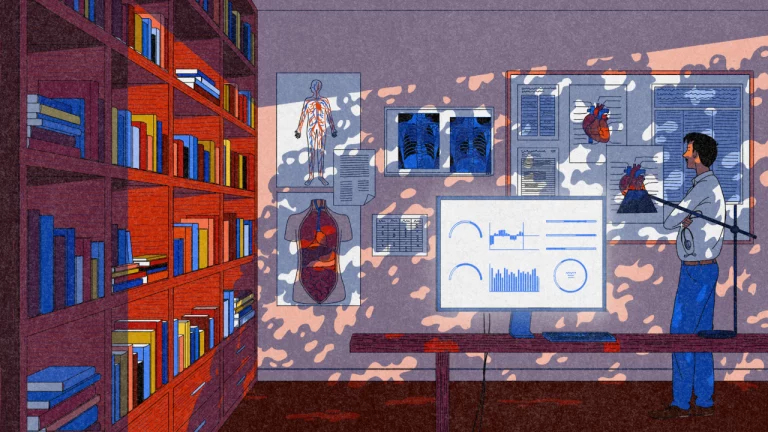
That belief shows up in the projects they talk about with most pride, like the work with a cancer‑tech client using AI to detect cancer earlier, where design and storytelling sit right on the line between technology and human impact.
From the outside, DixonBaxi’s “cool” image may look like a carefully managed aura. From the inside, though, it looks more like a constant, sometimes uncomfortable practice: keeping the work visible, building emotional intelligence, protecting serious play, archiving the messy middle, and choosing to, in Simon’s words, “change before change is forced upon you”.
For creative professionals wondering how to stay confident in uncertain times, this might be the most useful lesson of all. The work is never finished… and that’s precisely where the energy comes from.